



Buying the right machine is essential if you want to achieve efficiency in any project. Whether you’re working on large urban projects or agricultural projects in rural areas, the choice of machines often revolves around two machines: backhoe loaders (retroexcavadora) & mini excavators (miniexcavadoras). Both machines are staples in construction, mining, infrastructure & various key sectors.
While both machines are highly capable, they boast differences & buyers often confuse the two machines. In this blog, we’ll dive deep into both machines, discuss unique Mexican conditions & challenges, & why these machines shine. As a bonus, we’ll run through key applications of both equipment to help you purchase better.
For buyers looking for a construction backhoe loader machine, HexL emerges as one of the best names in this business. The HexL 420X SuperBackhoe is designed to perform & showcase capabilities in varied Mexican conditions, while promising class-leading uptime & durability.
Retroexcavadora & Miniexcavadoras Vs. Mexican Challenges
Earthmoving equipment like backhoes & mini excavators is essential in various sectors. They can easily work on labour-intensive tasks like site preparation, trenching, backfilling, etc., increasing productivity & accelerating worktimes. For diverse jobsites in Mexico, from tight urban areas to open farmlands, understanding the advantages of a retroexcavadora & miniexcavadoras can help you know why these machines are highly useful.
Mexico’s diverse terrain & project types require every manager to buy a machine that is justified by real jobsite conditions & requirements, not just fancy specs on paper. Urban projects in cities like Monterrey & Guadalajara often consist of narrow streets, tight access, snug parking spots & dense underground utilities. Here, compact machines like miniexcavadoras shine by reducing traffic disruption, cutting reworks, & easy operation.
In rural & semi-urban areas, steep roads filled with dirt, scattered plots & long distance roads, make a retroexcavadora perfect. The reason behind this is simple: one machine that can conquer tough terrains, while efficiently performing digging, material handling, loading, unloading & various other tasks.
Seasonal rain turns clay into deep mud, so tracked machines like mini excavators provide enough traction & stability, while a tyre-fitted backhoe loader offers better handling on drier surfaces & a predictable environment.
What Is A Retroexcavadora Or Backhoe Loader?
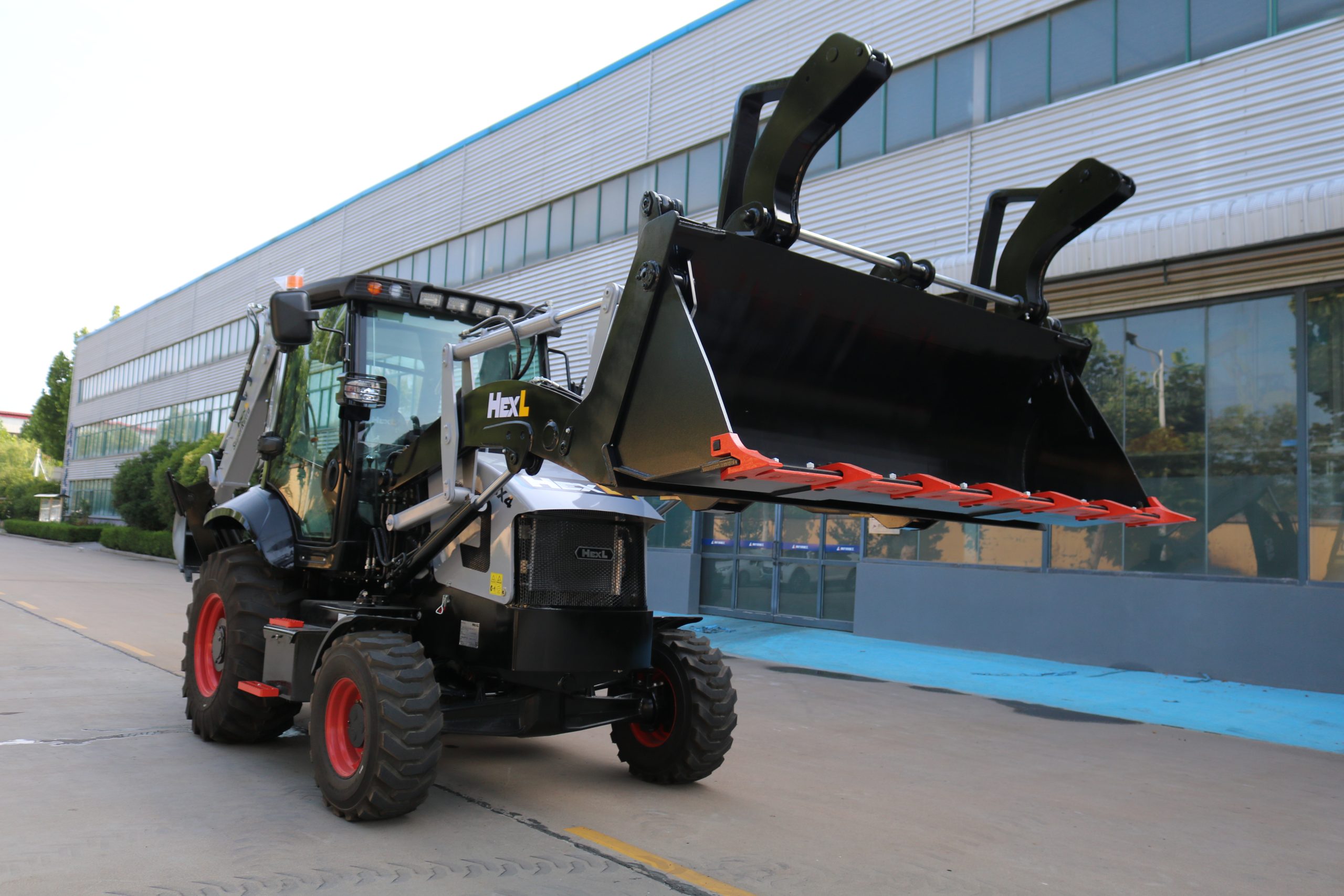
A retroexcavadora (construction backhoe loader) is a multi-purpose equipment that includes a front loader & a rear backhoe arm, mounted on a tractor, with the latter running on wheels. The front loader arm is designed for material handling, loading, unloading, grading & various other tasks.
The rear arm, however, can fold & is fitted with a smaller bucket. The smaller bucket is designed for digging, trenching, & tearing. Stabilisers underneath the chassis keep a construction backhoe loader poised during heavy applications or uneven ground. Since this machine runs on wheels, it can drive on roads & is faster.
Uses Of A Retroexcavadora In Mexico
1. Excavating trenches for water, gas, sewer, & electrical wires in cities & towns
2. Loading, unloading & hauling construction materials like sand, gravel, cement & demolition debris
3. Performing site preparation & land levelling for housing projects, building warehouses & small industrial projects.
4. Ditch cleaning, repairs & small culvert work in road repairs & maintenance
5. Light demolition of buildings, walls, pavements, & small structures
6. Handling cement pallets, water pipes & other heavy materials using hooks or forks
7. Rural & agricultural tasks, including pond clearing, creating irrigation systems & farmlands
What Are Miniexcavadoras?
Miniexcavadoras or mini excavators are compact versions of traditional excavators. They are specialised digging equipment, designed with a cab on a rotating platform, a dipper stick & a smaller bucket used for digging & trenching. The operator’s cab can rotate 360° for better visibility & since it runs on rubber tracks, the travel speed is slower than backhoe loaders.
A mini excavator is better suited if you want to work on excavation projects & tight urban areas. Their zero-tail swing design allows them to operate in tight urban spots without having to worry about damaging infrastructure, while rubber tracks & light-weight structures cause less damage on sensitive grounds like lawns, farms, etc.
Uses Of Miniexcavadoras In Mexico
1. Precision trenching in narrow lanes & snug urban areas
2. Digging for building small foundations, swimming pools, septic tanks & basements
3. Best for working in industrial plants, refineries, & factors where space is limited
4. Light landscaping tasks like contouring, plant preparation, stump removal & garden maintenance
5. Cleaning of canals, drainage ditches & small irrigation channels without damaging infrastructure
6. Working on sensitive or finished surfaces like streets, yards, & gardens without causing damage
7. Light demolition tasks & renovation works using attachments like breakers, grapples & crushers
H2: Retroexcavadora vs. Miniexcavadoras: Which is ideal for your Mexican jobsite?
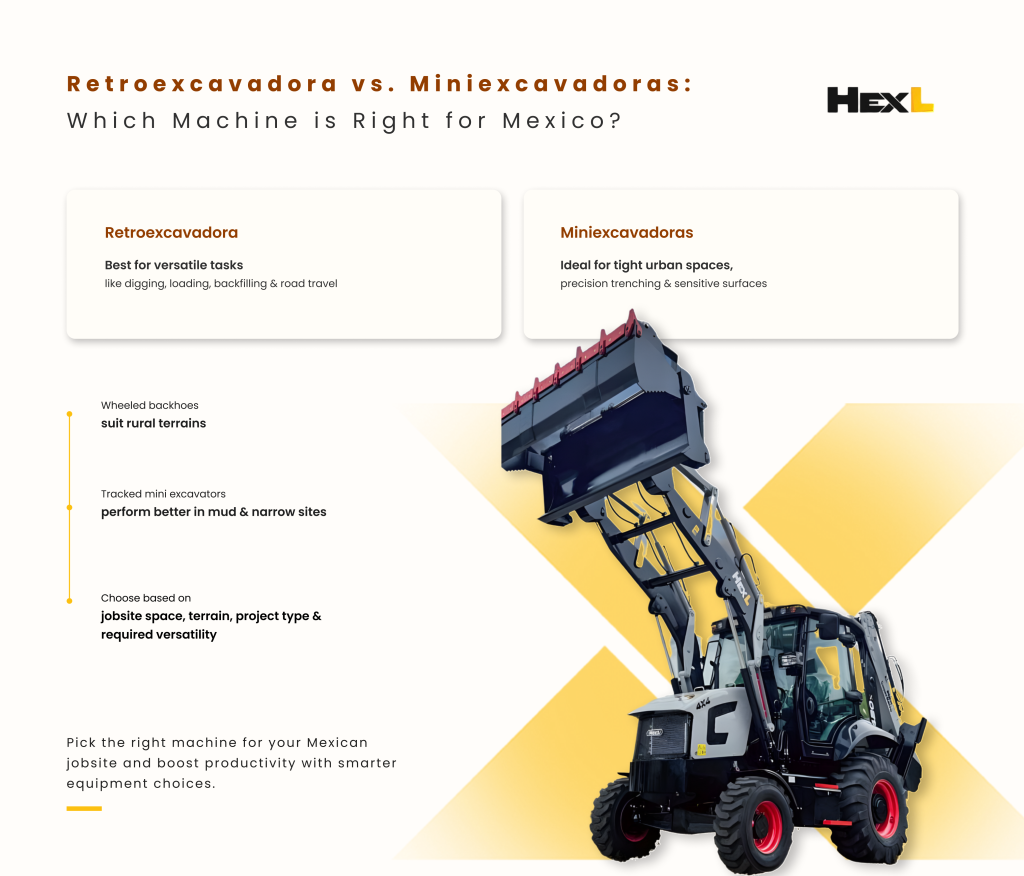
- Choose a retroexcavadora if you want faster travel speeds & need to drive on roads without a trailer.
- Opt for a retroexcavadora when you need a machine for digging, loading/unloading on trucks, backfilling & municipal works.
- A construction backhoe loader is best if you want to work in infrastructure & construction jobs, ranging from light to medium tasks.
- Buy miniexcavadoras if you want to work in tight worksites, busy roads & light projects
- Mini excavators are more ideal if your tasks revolve around digging, excavations, trenching & drilling.

