



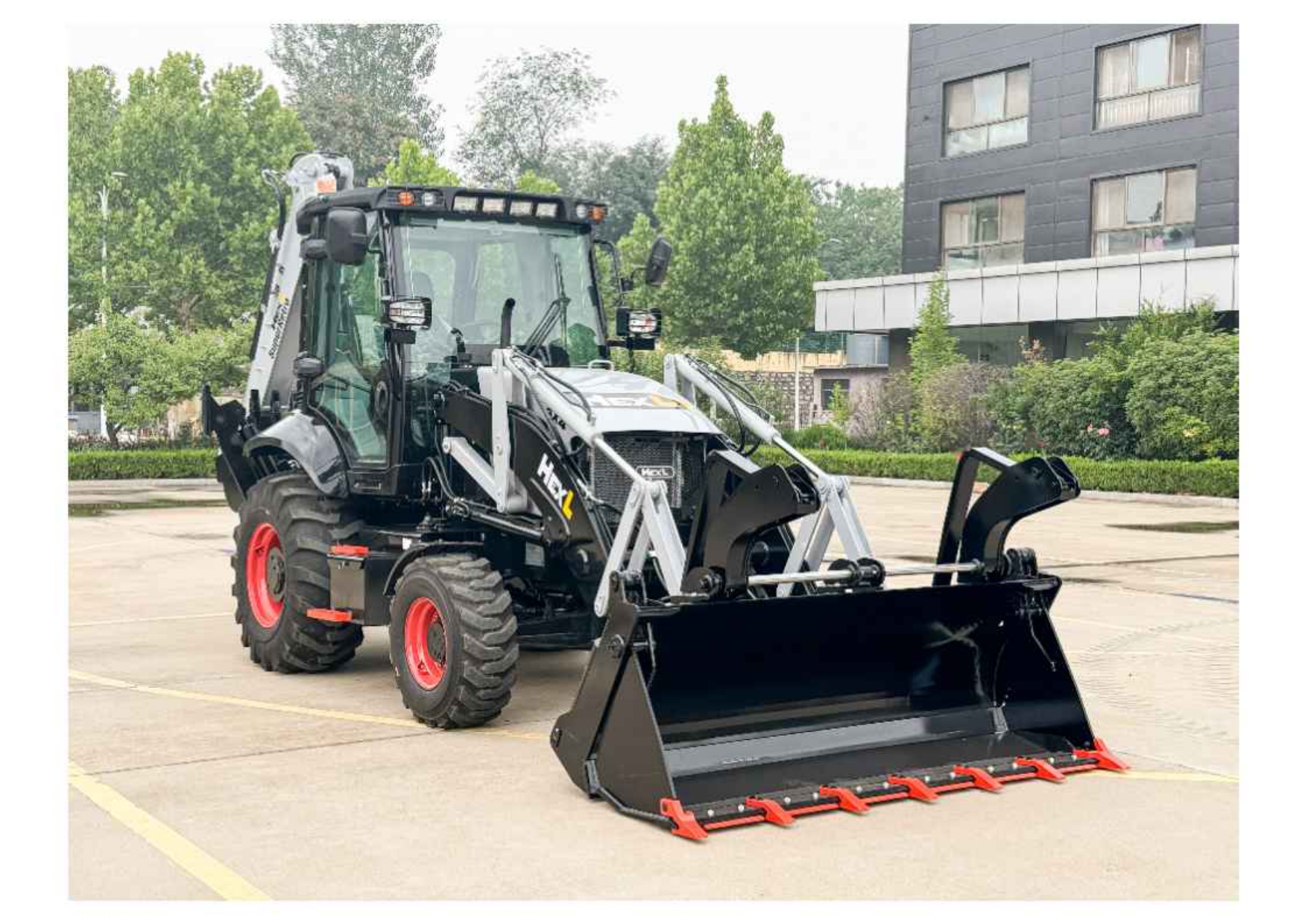
The engine is the most important part of any machine. For every extraordinary machine, its capabilities begin with a backhoe loader engine, & TLBs like the HexL 420X SuperBackhoe are designed to prove just that. Being the heart, an engine directly impacts the fuel bills, daily productivity, performance & how long it lasts on tough jobs.
However, the problem is that most buyers look at just the horsepower numbers, completely overlooking crucial specs that actually handle the heavy lifting. This keeps essential engine specs more important than just HP (horsepower). In this blog, we will discuss why backhoe loader engine performance matters and what makes a good TLB engine.
What Does A High-Power Backhoe Loader Engine Mean For TLBs?
Most buyers mistake the concept of high performance with maximum horsepower. Although horsepower determines how fast work is done, it’s not the only metric required to judge a capable machine. The true performance of a tractor-loader-backhoe (TLB) is its capability to consistently deliver torque and power for heavy applications while ensuring maximum efficiency and reliability.
In real-world instances, this combination leads to faster cycle times, lower fuel consumption and diesel costs, and reduced downtime. To understand how a diesel engine backhoe loader maintains this balance, let’s take a deeper look at what’s underneath.
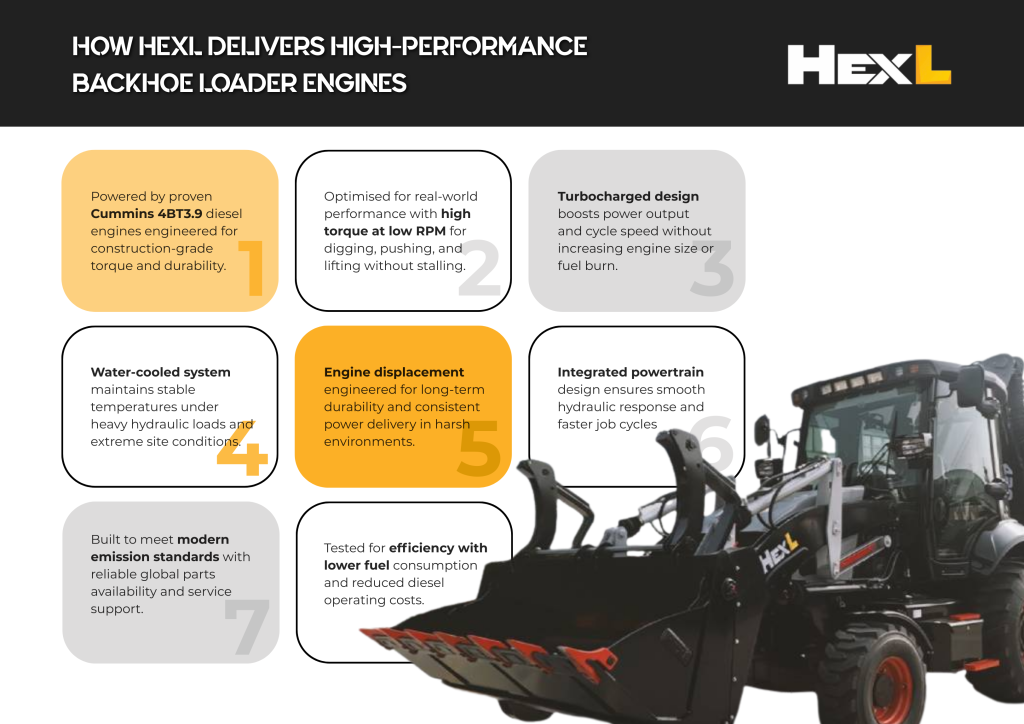
TLB/Backhoe Loader Engine: Key Specifications That Matter
1. Horsepower: Determines the speed of your work. A higher HP rating helps during roading the machine between sites or lifting materials quickly.
2. Torque: Also called “grunt” or “punch” of the machine, this metric is crucial for construction equipment engines. A higher torque rating at low RPM enables you to effortlessly push or pull, or dig hard surfaces without stalling.
3. Engine Displacement: This is the engine’s physical size. A larger displacement generally translates to higher power output & long-term durability.
4. Turbocharging: A turbocharger plays a key role in determining backhoe loader engine performance. A turbo forces more air into the engine chamber to produce higher power without increasing the size/displacement. This enhances cycle times & high-altitude performance.
5. Cooling: Effective cooling systems help in keeping the engine cool & maintain steady temperatures for ensuring optimal performance, durability & efficiency.
To put it into perspective, how engine specs impact performance and efficiency, let’s consider a 74-horsepower model versus a 90-horsepower model and the 102-horsepower HexL 420X Superbackhoe.
The 74-Hp vs 90-Hp Vs 102-HP Hot Debate!
The Standard 74-HP: These machines are generally entry-level but are very fuel efficient. However, they are generally designed for light-duty work and lack the breakout force needed for tough applications.
The 90-HP Upgrade: If you want better power, speed, and lifting capacity, TLBs with 90-horsepower engines are better for loading & medium-duty applications. But they can still struggle to maintain power & torque under heavy hydraulic stress and heavy-duty applications.
The 102-HP HexL Advantage: The HexL 420X SuperBackhoe enters the arena with its 102-HP Cummins 4BT3.9-C100 engine, churning up to 330 Nm of torque.
This leads to:
- Faster cycle times
- 40 kmph top speed
- Enhanced performance without redlining the engine
- Higher torque at lower revs for higher efficiency
- Water-cooled design to maintain optimal temperature
- Turbocharged design for better performance
Understanding Beyond The Numbers
- Smart variable speed engines help in balancing energy output with hydraulic demands.
- Powertrains with reinforced engine blocks & efficient cooling units improve durability.
- Integrated turbochargers for better engine response under heavy applications
- Reduced fuel use with better torque management, leading to lower project costs
- Smoother hydraulic movements with faster job cycles from an optimised design
How To Choose The Right Backhoe Loader Engine?
- Don’t just chase machines with the highest horsepower. Also, prioritize engines providing higher torque at lower RPM for the best efficiency.
- Check the power-to-weight ratio, which indicates good stability and lifting performance.
- Look for the manufacturer of the engine. This ensured easy part availability and durability.
- Make sure the diesel engine backhoe loader/TLB you are choosing meets the current emission standards to future-proof your fleet.
- If you are operating in high altitude regions or working in heavy-duty tasks, look for turbocharged options for better backhoe loader engine performance.
- Check the cooling system capacity carefully, as overheating can damage the hydraulics and construction equipment engines.

