



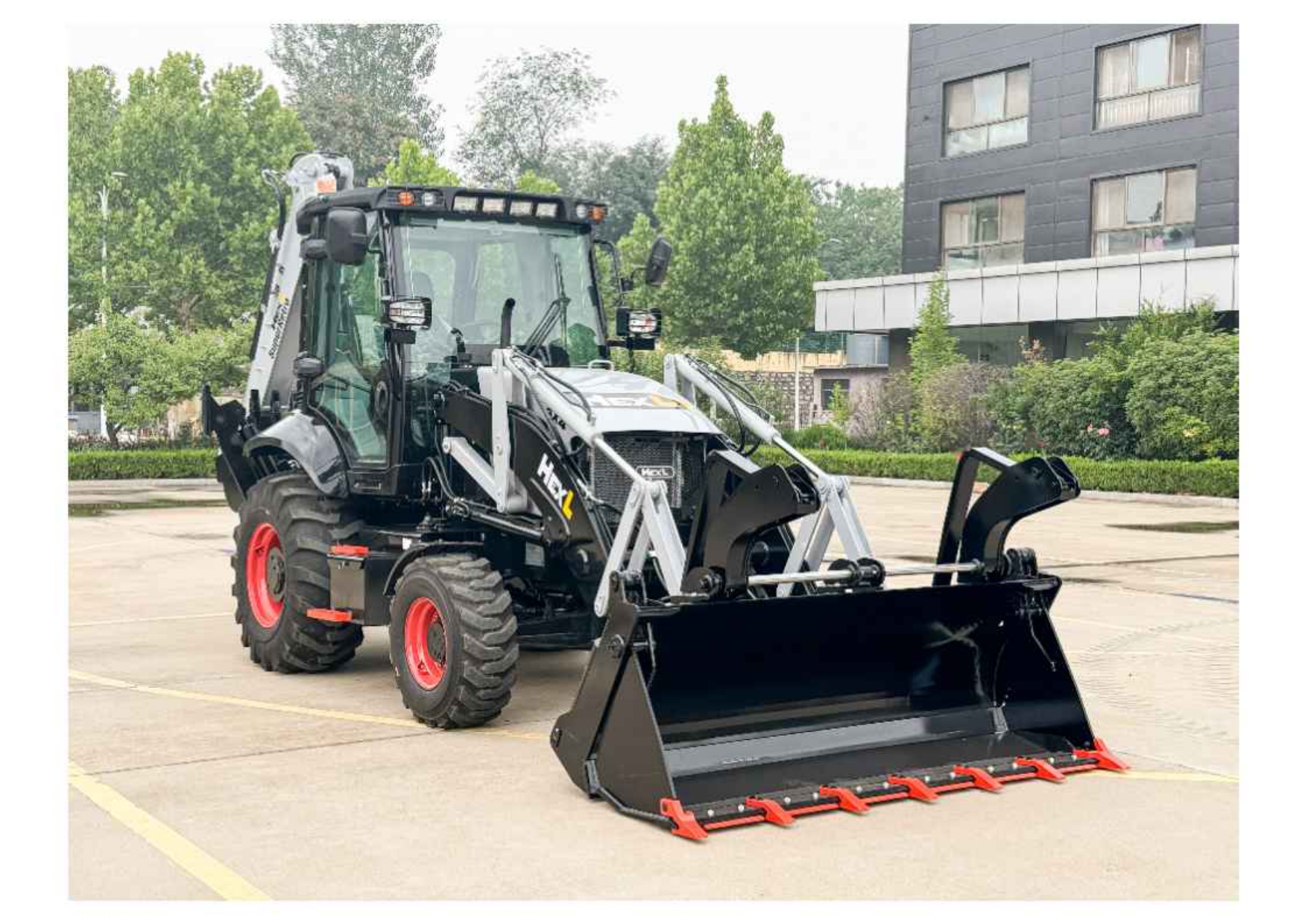
The Complete Guide to Backhoe Loader Transmissions: Types, Benefits & Performance
The engine is often considered the heart of any machine, not just backhoe loaders. But what about the transmission? Often called a gearbox or torque converter, this device takes the outputs manufactured by the engine & delivers them to the wheels, plus indirectly powers the hydraulic system. While engines are often lauded, a backhoe loader transmission dictates cycle times, fuel efficiency, & how easily your operator does a work.
Many fleet managers are unaware that the transmission can significantly impact backhoe performance, efficiency, productivity & even durability. Selecting the right transmission is about matching the drivetrain to your job site demands & enhancing productivity. This guide explores the types of transmissions & the benefits of each type to help you find the right fit for your fleet.
Backhoe Loader Transmission: Explained
In simple words, a transmission bridges the gap between the engine & the wheels. It manages the power & torque generated by the engine, and delivers it to the axle, which drives the wheels. While it’s very similar to that of a truck, a backhoe loader transmission is designed to handle higher torque for the brutal demands of a construction site or mining activities.
It makes sure your equipment moves at the right speed while maintaining optimal power to push into a pile or climb a steep grade. The right transmission helps an operator move smoothly, maintain the right speed for trenching or loading, & keep hydraulic performance consistent under loads.
For fleet managers and buyers, this directly impacts backhoe performance, fuel usage, cycle times, and long-term component wear.
Types Of Transmissions In Backhoe Loaders
1. Power Shuttle Transmission
Power shuttle transmissions are the industry standard for backhoe loader transmissions & entry-level machines. It uses a torque converter coupled with a manual gear stick, usually with four speeds. There is also a separate lever on the steering column to switch between forward and reverse without needing to use the clutch pedal.
Benefits:
- Mechanically simple
- Highly reliable & durable
- Easy to repair
- Faster directional changes
- Easy to use
Ideal For:
- Loading
- Backfilling
- General construction jobs
- Jobs that require frequent forward/backward movement
2. Power Shift Transmission
Power Shift transmission eliminates the use of a manual floor shifter. Operators need to use a twist-grip or column-mounted lever to change between gears & directions electronically. This allows for smooth shifting on the move without having to use a clutch.
Benefits:
- Smooth gear changes without losing traction
- Better fuel efficiency
- Consistent backhoe performance across different RPM levels
- Reduced operator fatigue
Ideal For:
- High-intensity applications
- Larger fleets where fuel efficiency is crucial
- Mixed application works
- Tasks needing faster travel speeds
- Roading & transport
- Loading & heavy-duty works
3. Automatic Or Hydrostatic Transmission
Backhoe loader transmissions in high-end models are generally automatic or hydrostatic in nature. This type of transmission uses automatic shifting or hybrid systems, which sense load & speed to shift gears automatically. As a result, the engine meets the optimal RPM range or combines hydrostatic drives for loading with mechanical drives for road movement.
Benefits:
- Simplified operation
- Maximum fuel efficiency
- Reduced driver fatigue
- Optimal power delivery & backhoe performance
- Improved handling
- Increased durability & less wear
Ideal For
- Utility works
- Urban projects
- Tasks in congested & tight sites
- Applications requiring precision
- Repetitive cycle work
- Fine grading & landscaping

