



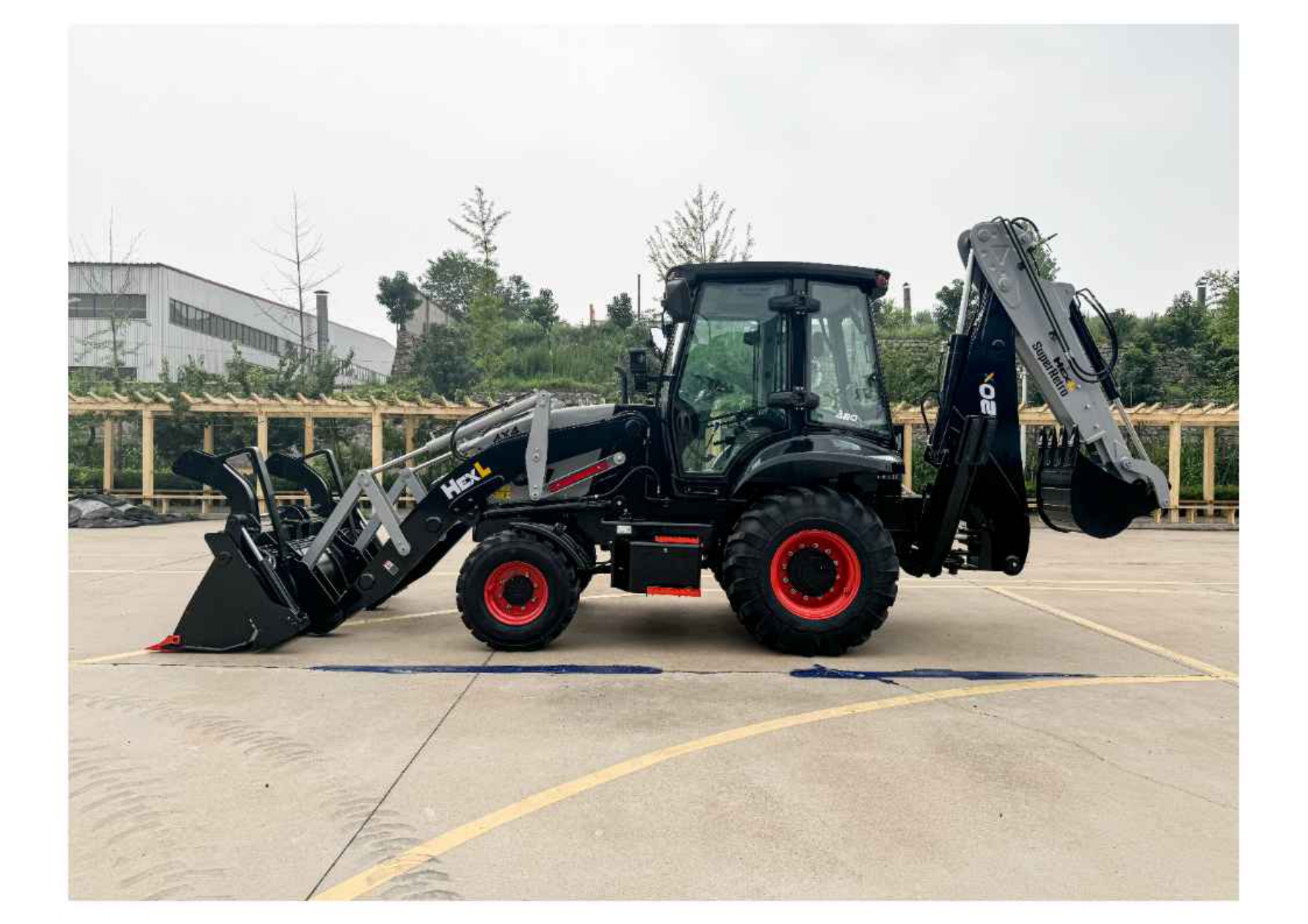
Tractor-loader-backhoes (TLBs) are the most versatile heavy machines worldwide. But, are you taking the full advantage of your machine? If not, we’ll tell you the importance of backhoe loader attachments.
The front loader & backhoe bucket can perform material handling, lifting, digging, & trenching.
What if we say you can increase your machine’s functionality with optional attachments? This blog takes you through the various construction machinery parts, which you can fit to perform a variety of tasks.
Meanwhile, if you’re looking for a reliable TLB (tractor-loader-backhoe), check out the HexL 420X SuperBackhoe.
10 Most Common Backhoe Loader Attachments
1. Augers
Augers or drillers are popular construction machinery parts for digging with backhoes. This hydraulic-powered equipment helps you dig deep, precise & consistent-diameter holes, unlike the rear bucket, where inconsistency is common. You can use an auger if you want to dig holes for poles, tree plantations & making foundations.
2. Hammers
Hydraulic hammers are highly popular among optional construction machinery parts. This attachment uses immense hydraulic force to deliver powerful punches & repetitive blows, allowing operators to break hard materials like stones, concrete, etc. Hammers are used for building demolition, breaking rocks & concrete.
3. Graders
Motor graders are specialised equipment for land grading, but they are expensive. What if your TLB can perform its tasks via optional construction machinery parts? Optional grader attachment for backhoes includes a wide blade that can be used to create smooth & level surfaces. It is highly useful for levelling uneven driveways, grading lawns & contouring terrain.
4. Compactors
Your TLB can also perform the chores of a roller or compactor through an optional compactor attachment. Compacting attachments for backhoes are available in various types, including vibratory plate or drum or compaction wheels. These construction machinery parts leverage hydraulic vibration & downward pressure to increase ground density & compact soil or gravel.
5. Thumbs
Hydraulic thumbs are common backhoe loader attachments. This optional attachment is a pincer-like attachment that works opposite to the rear bucket. This unique design allows it to grab, lift & precisely place materials, providing grappling capabilities. It’s highly useful if you want to grab irregularly-shaped items, useful in land clearing & demolition.
6. Rippers
The backhoe bucket can penetrate through most surfaces, but it struggles with rocks, concrete & frozen ground. Rippers are specialised construction machinery parts, which include a heavy-duty metal claw designed to penetrate & tear through hard surfaces. They are often used in mining, demolition, land clearing & trenching.
7. Forks
Pallet forks turn your TLB into a specialised lifting machine. This attachment can be fitted to the front loader quick hitch, with which it can lift palletised cargo & goods. It’s highly useful when you need to load, unload, or move sensitive materials. Also, this attachment can handle aggregates like bricks, SOD & cement.
8. Grapples
Grapples are designed for material handling. This optional backhoe loader attachment uses a claw-like design to grasp & move bulky and irregularly-shaped objects efficiently. It can perform challenging tasks like handling large debris & awkward materials in waste management, construction, infrastructure & mining sectors, where a backhoe bucket will struggle.
Why Do Backhoe Loader Attachments Matter?
- Instantly increases jobsite versatility
- Reduces the need for multiple types of heavy equipment
- Reduced labour costs
- Ensures high productivity & helps you complete tasks quickly
- Helps you earn more by working on different projects
- Maximum return on investment
Backhoe Loader Attachment Maintenance Tips
- Always adhere to the manufacturer-specified service intervals
- Grease pins, fittings & bushings regularly
- Check hydraulic hoses regularly for cracks & abrasion
- Inspect for wear & fractures
- Replace worn-out cutting edges & teeth
- Store in dry places to avoid rust
- Use the correct attachment for each job

