



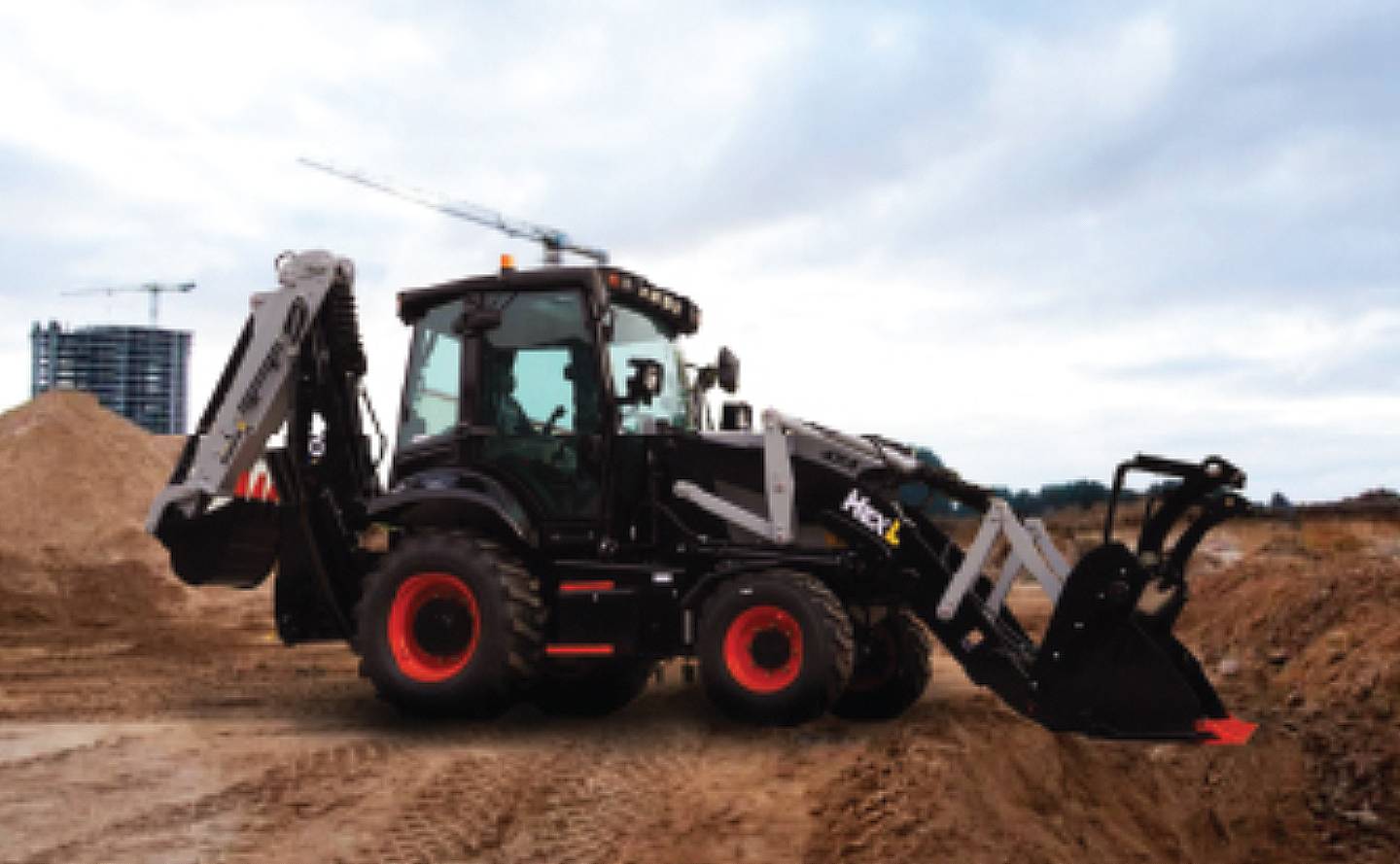
Mini excavators & backhoe loaders are the most popular construction machines globally. Both machines are exceptionally versatile, packing excellent power & capabilities in a compact package. While visually similar to untrained eyes, they differ in terms of applications, tasks, price, features & working mechanisms.
Given their differences & visual similarities, most buyers face confusion before buying, making mini excavator vs backhoe a highly contested topic. Thus, knowing these machines fully is essential before making a purchase. Below, let’s discuss both machines in detail, explore how they work & find which is right for you.
Are you looking to buy a backhoe loader? Explore the capabilities, specs & features of the HEXL 420X SuperBackhoe.
What Is A Backhoe?
Backhoe loaders or TLB (Tractor, Loader, Backhoe) are the “Swiss Army Knife” among construction machines, symbolising their high versatility. It’s designed to offer raw power, work on several tasks & accelerate productivity, all in a compact package. This allows construction businesses to avoid the need for multiple machines.
A backhoe includes a tractor, wheels, a front loader, a rear bucket & stabilisers. The front arm assists with upward/downward movement & controls the loader bucket. The rear arm can fold, rotate, & control the smaller bucket for digging. Both the front & rear have a quick coupler to fit a variety of attachments. The tractor houses a big diesel engine, hydraulic mounts & unit, an operator cab, & wheels.
The front loader mainly performs material handling, loading, unloading, demolition & site preparation. In contrast, the smaller bucket behind is used to dig, trench & dredge. Optional attachments like augers, brooms, rollers, grapples, hammers, etc., increase versatility. TLBs are also available in various sizes, operating weights, engine power & capabilities, making them more versatile than mini excavators.
Backhoe Loader Uses
- Construction: Construction material handling, carrying rods & aggregates, demolition, site preparation, backfilling, etc.
- Landscaping: Digging, trenching, grading, tree plantation, & dredging.
- Agriculture: Digging, trenching, agricultural goods handling, land clearing, etc.
- Others: Road maintenance, demolition, snow removal, pipe & wire laying, mining, etc.
What Are Mini Excavators?
Mini excavators or compact excavators are smaller versions of traditional excavators. These machines are significantly smaller than traditional excavators & are designed to fit in snug environments like urban sites, small farms, etc. These machines are highly preferred for their adaptability & affordability. Additionally, they are also available with electric powertrains.
Like traditional excavators, mini excavators have a rotating cab fitted on a tracked platform. However, the operator cab is smaller & the tracks are made of rubber. The cab can rotate 360° for easy operation & better visibility. Unlike backhoes, mini excavators are only designed for digging & trenching. These machines have zero-tail swing for working in tight spaces.
Mini Excavator Uses
- Construction: Site preparation, foundation digging, light trenching, light demolition, & utility installation.
- Landscaping: Digging, land grading, levelling, light excavations, and tree & vegetation removal.
- Agriculture: Farm land digging, trenching, bush clearing, light material handling, & backfilling.
- Others: Small & light material handling, ditching, culvert installation, snow removal, mining, & quarrying.
Mini Digger Vs Backhoe: Differences To Know
| Feature | Backhoe Loader | Mini Excavator |
| Primary Functions | Material handling, digging, trenching, site preparation, demolition | Digging, excavating, trenching, dredging |
| Size Range | Available in various sizes: compact, medium & large. | Available in various sizes: micro, mini, & midi. |
| Powertrain Outputs | 50-90 hp | 14-55 hp |
| Fuel Used | Diesel | Electric, diesel |
| Mobility & Speed | Wheeled design for faster speeds & allows it to be operated in different terrain. | Rubber tracks for slower speed & better stability |
| Operating Weight | 3-20 tons | 0.6-10 tons |
| Swing Radius | Limited | 360° |
| Material Handling Capacity | High | Low |
| Digging Capabilities | Low | Moderate |
| Attachment Compatibility | High | Moderate |
| Suitability | More versatile, ideal for construction, mining, and other applications. | Light-duty tasks, excavation tasks, etc. |
| Upfront & Maintenance Costs | High | Lower |
Mini Excavator vs Backhoe: Which To Choose?
For starters, the answer isn’t simple & it entirely depends on what you want. As mentioned earlier, both machines are different & are available in various sizes. If you want a machine solely for digging, trenching, small demolitions & other light-duty works, mini excavators are ideal. For cost-effective solutions & lower running costs, this machine does fine.
However, if your goal revolves around adaptability & you’re willing to buy one machine for several tasks, which also includes the work done by a mini excavator, we always recommend backhoe loaders. It can perform the duties of a bulldozer, mini excavator, compactor, & various other machines, meaning you can save tons of money with a backhoe.
Additionally, we recommend assessing your needs & choosing the engine & lifting power, and operating weights before buying backhoes, since there are several types.

